
Application / New Energy & Storage
BESS Container & Battery Room Gas Safety Monitoring
Before a lithium battery vents or catches fire it releases hydrogen, CO, CO₂ and electrolyte vapour — gas sensing is the earliest warning layer in BESS containers and battery rooms.
- H₂ / CO / CO₂ / VOC Thermal-runaway marker gases
- ppm level Sensitivity needed for early warning
- 4.0% vol Hydrogen LEL
- seconds Response time of mainstream models
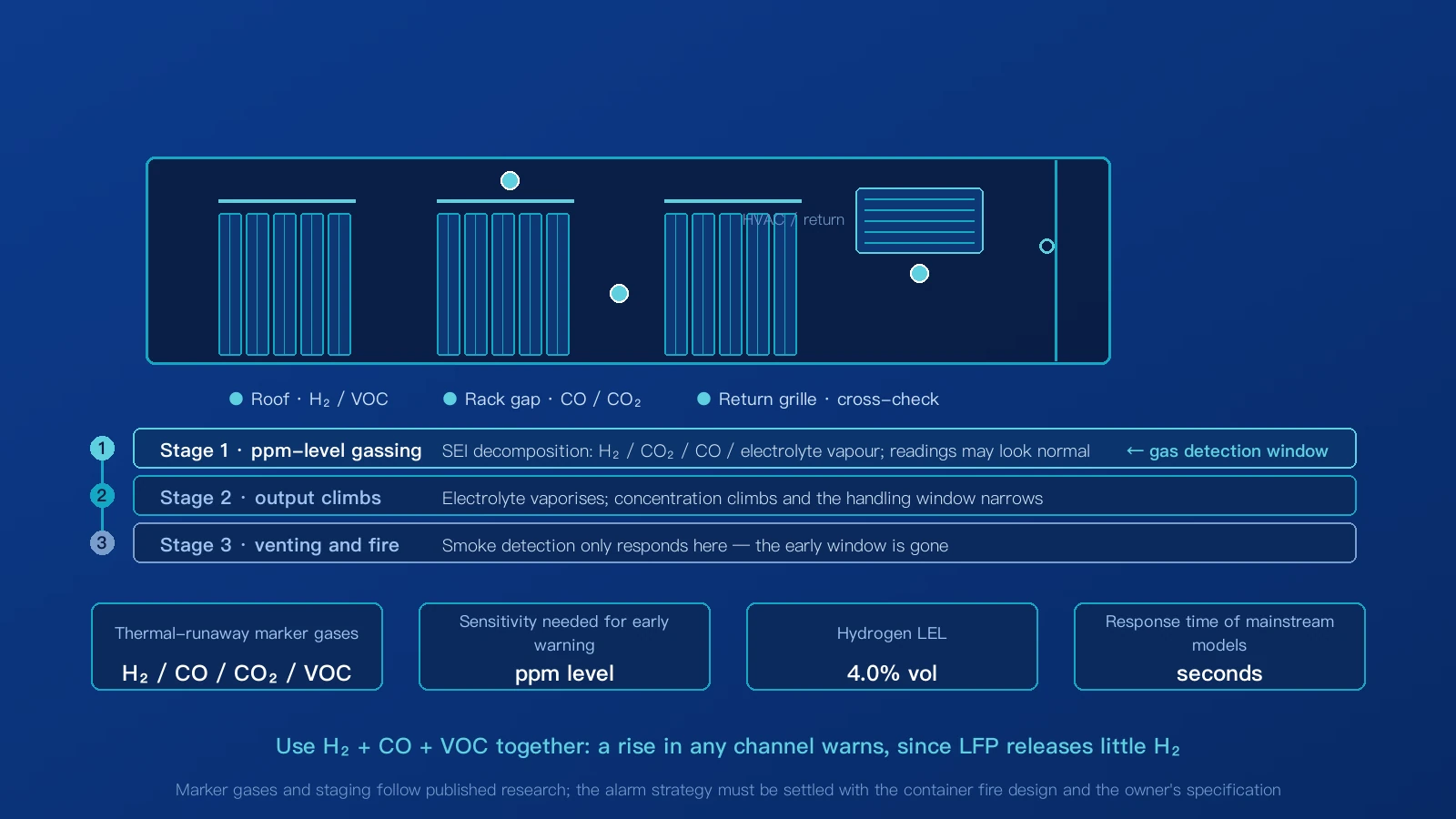
The Gas Timeline of Thermal Runaway
Stage one — internal micro-shorts and rising cell pressure: the SEI layer decomposes and starts releasing hydrogen, CO₂, CO and carbonate-based electrolyte vapour, in the ppm to low-hundreds-of-ppm band, while temperature and voltage signals may still look normal. Stage two: gas production climbs sharply as electrolyte vaporises. Stage three: venting and fire. The entire value of gas detection lies in catching stage one.
Where to Place Detection Points in a Container
Placement follows gas density rather than even coverage. Hydrogen is the lightest gas and electrolyte vapour also rises, so points belong at the container roof and above the racks; CO and CO₂ are close to air density and can be picked up between racks and at the return-air grille.
- Cross-check roof, rack gap and return-air grille so no single point carries the decision
- Prefer multiple diffusion points over sampling lines, which add transport delay
- Interlock with fire and ventilation systems: start extraction first, then shed power, so gas does not accumulate
- After inerting or nitrogen suppression, oxygen must be re-checked before anyone enters
Choosing a Hydrogen Sensor
Electrochemical sensing handles ppm-level early warning; catalytic or thermal-conductivity sensing handles %LEL alarms; both ranges often have to coexist in one container. Infrared is simply not an option for hydrogen, so don't be steered by the appeal of maintenance-free infrared. For outdoor or cold-climate containers, watch temperature drift and condensation, and choose a model whose rated operating range covers your site extremes.
Battery Lines and Charging Stations Are a Different Duty
Production lines — filling, formation and ageing shops — are about long-term occupational exposure to electrolyte vapour and VOC, where a narrow range and good resolution come first and ventilation interlocks are standard. Charging and swap stations are about anomalous gassing from a pack, which calls for a small, low-power module that can drop onto the charger's own board. The two duties select very differently and are best specified separately.
Gases to Monitor in Storage and Battery Duty
Use H₂ + CO + VOC as the primary line, with CO₂ and O₂ as support. Ranges below are given as a pair: early warning, plus %LEL alarm.
| Gas | Typical Range | Recommended Principle | Duty Notes |
|---|---|---|---|
| Hydrogen (H₂) | 0–1000 ppm / 0–4% vol | Electrochemical (ppm) / catalytic or thermal (%LEL) | One of the earliest markers of thermal runaway, LEL 4.0% vol; place points at the container roof. |
| Carbon monoxide (CO) | 0–100 / 0–1000 ppm | Electrochemical | A product of electrolyte decomposition and incomplete combustion; a simultaneous rise with H₂ is highly suspicious. |
| Carbon dioxide (CO₂) | 0–5000 ppm / 0–100% VOL | NDIR infrared | Released alongside H₂ and CO during SEI decomposition; a useful cross-check channel. |
| VOC / electrolyte vapour | 0–10 / 0–200 ppm | Electrochemical equivalent | Carbonate solvent vapour — the main occupational exposure factor in filling and formation shops. |
| Methane / combustible | 0–100% LEL | NDIR infrared | Supporting detection for gas-fired plants, hydrogen blending and biogas upgrading. |
| Oxygen (O₂) | 0–25% vol | Electrochemical | The entry criterion after inerting or nitrogen suppression; acceptable band 19.5–23.5% vol. |
The marker-gas set and staging follow published research; the actual alarm strategy must be settled together with the container fire-protection design and the owner's specification.
Recommended Models for Storage Duty
Covering both ppm-level early warning and %LEL alarm, with low power and small size so they drop into in-container monitoring nodes.
7 gas categories covered
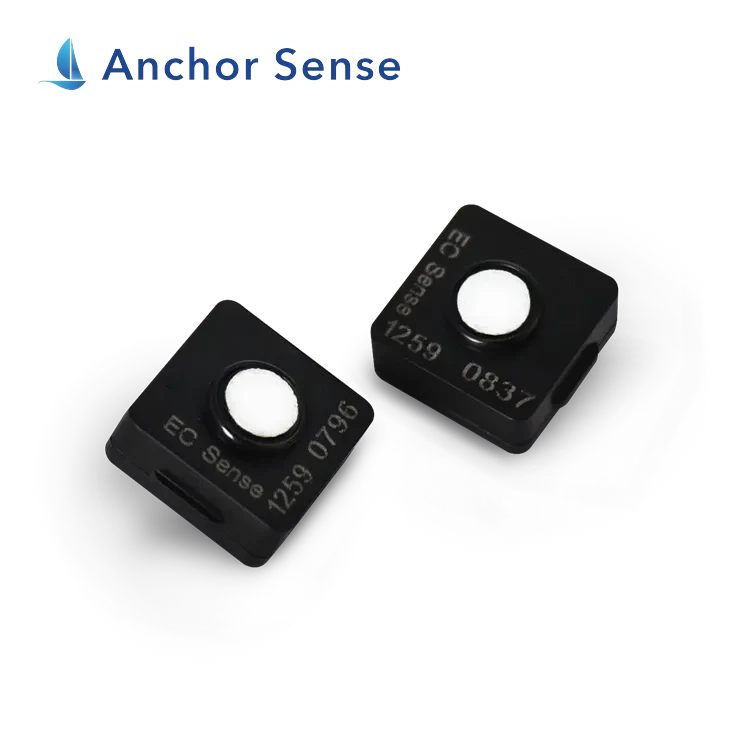
ES1-H2-1000 Hydrogen Gas Sensor
Amperometric, 3-electrode
ES1 package, 0 – 1000 ppm range, Hydrogen detection
View Details → ES1-CO-100 Carbon Monoxide Gas Sensor
Amperometric, 3-electrode
ES1 package, 0 – 100 ppm range, Carbon Monoxide detection
View Details →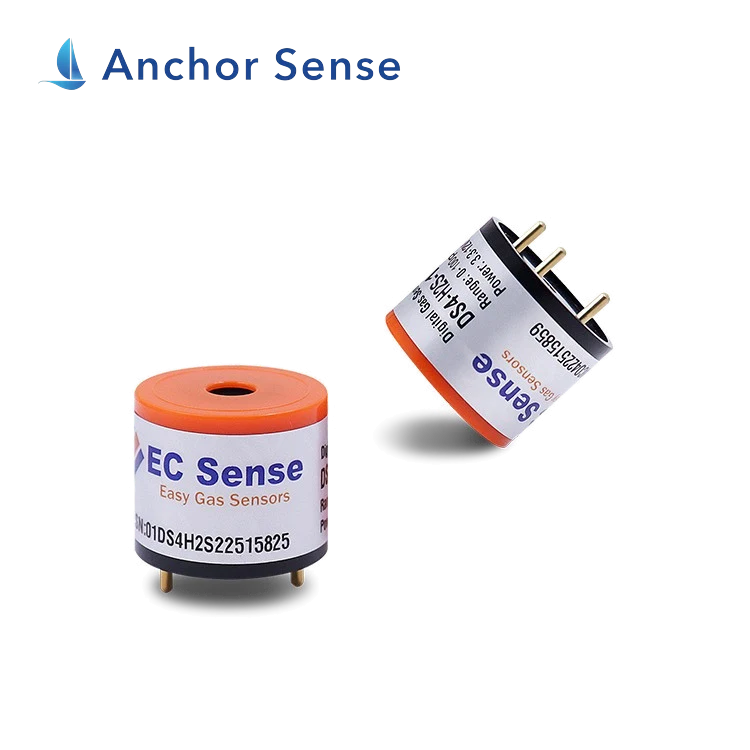
DS4-TVOC-200 Smart TVOC Gas Sensor
Printed Solid-Polymer Electrochemical (smart digital output)
EC Sense DS4 smart TVOC sensor, 0 – 200 ppm range, 0.1 ppm resolution, UART digital output, factory-calibrated
View Details →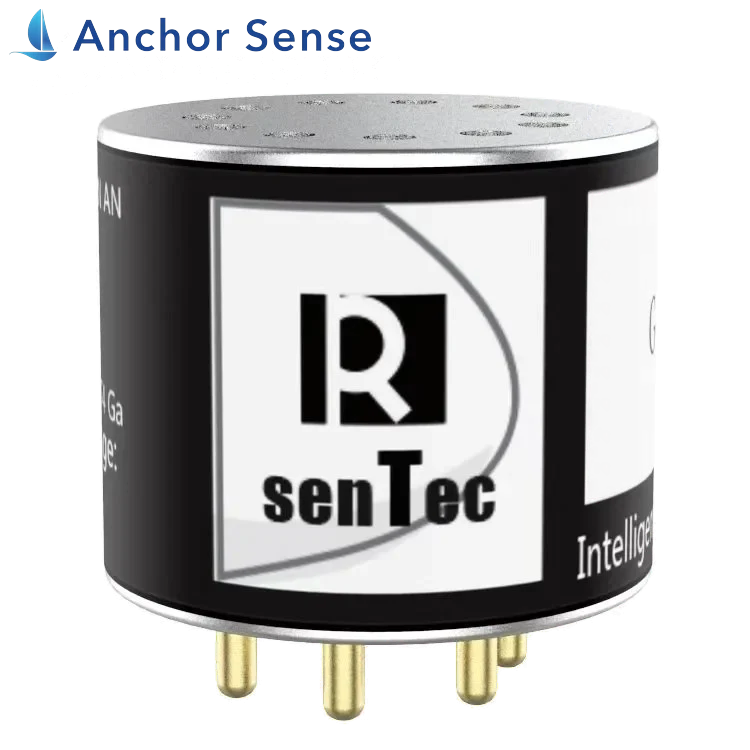
G4442 Carbon Dioxide NDIR Infrared Gas Sensor
Non-Dispersive Infrared (NDIR, dual-wavelength optical path)
Shanghai Yixin G4442, 0 – 1% VOL range, dual-wavelength NDIR detection
View Details →Related Series
Frequently Asked Questions
Can a hydrogen sensor work at ppm level?
Yes. Electrochemical H₂ sensors go down to 0–1000 ppm and lower, which is what stage-one thermal-runaway warning needs; %LEL alarms use catalytic or thermal-conductivity sensing. The two often coexist in the same container.
If there is already smoke detection, is gas sensing needed?
Yes. Smoke detection responds at stage three, but gas release begins at stage one; the gap between them can run from several minutes to tens of minutes, and that gap is the response window.
Can an infrared sensor detect hydrogen?
No. Hydrogen has no infrared absorption band, so NDIR and infrared optics do not respond to it. It requires electrochemical, catalytic or thermal-conductivity sensing.
What should we watch for in hydrogen blending and refrigerant duty?
Watch background gases and cross-interference, and separate leak detection from concentration measurement — the former needs a %LEL range, only the latter needs %VOL. For blending duty, configure a channel per component.
Tell Us the Container Build and the Fire-Interlock Logic
Container or room dimensions, cell chemistry (LFP / NCM), alarm strategy and staging, power and communications, and whether the fire panel must be interlocked.
Contact us